

There is a moment in many of the trainings I deliver when the room gets a little quiet.
It happens when I ask people to think about the last time they sent a handwritten thank-you note in a professional context. Not a reply email. Not a LinkedIn message. A real note, written by hand, put in an envelope, and mailed.
Most people can’t remember the last time they did it. Some never have.
And yet almost everyone in that room can immediately recall a time when receiving one stopped them in their tracks.
That gap – between knowing something matters and actually doing it – is at the heart of why I keep writing and speaking about the professional thank-you note. Not because it’s a charming old-fashioned nicety. Because it is one of the most underused relationship tools available to professionals at every level, and most people are leaving it entirely on the table.
Why Gratitude is a Professional Skill, Not Just a Courtesy
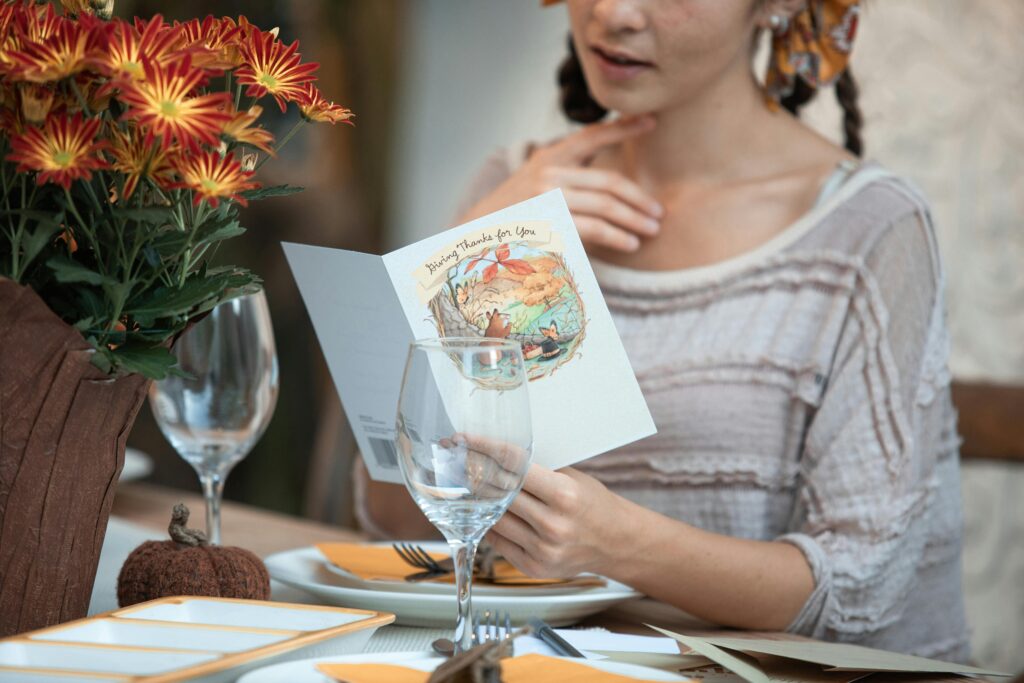
We tend to think of gratitude as a feeling – something we either have or don’t in a given moment. But expressing gratitude, consistently and meaningfully, is a skill. And like any skill, it requires deliberate practice before it becomes instinct.
In my work coaching and training professionals – from students navigating their first roles to executives leading large organizations — the pattern is remarkably consistent. People understand, intellectually, that acknowledging others matters. They agree with it when it comes up in a session. And then they walk back into their day, get pulled by the urgency of their inbox, and the note never gets written.
This isn’t a character flaw. It’s a focus problem. When we are so consumed by our own next move, our own deliverables, our own calendar, looking outward – truly noticing someone else’s effort, their time, their impact – is the first thing to slip. Training helps. So does being reminded, repeatedly, that this is worth the effort.
Which brings me to an unlikely role model.
What C.S. Lewis Can Teach Us About Professional Relationships
When we talk about professional development, we tend to draw our examples from boardrooms and business books. But some of the most useful lessons come from unexpected places – from people who embodied a principle so naturally that it never occurred to them to call it a skill.
C.S. Lewis is one of those people.
In the years following World War II, Lewis found himself on the receiving end of extraordinary generosity. American admirers, aware of the severe rationing that made everyday goods scarce in Britain, began sending him care packages – ham, cheese, tobacco, stationery, canned goods. The parcels kept arriving, often from the same donors, which created an unusual challenge: how do you thank the same people, again and again, without your gratitude becoming rote?

Most of us, faced with that challenge, would reach for the same reliable phrases. “So grateful.” “Thank you so much.” “Your generosity means the world.” Lewis did something different. He treated each note as its own small creative act – specific, personal, and attentive to the individual on the other end.
He wrote with warmth and humour, punning on the gifts themselves. One letter was signed “Ham-icably yours.” He noted not just how useful a gift was, but how thoughtfully it had been packed. On one memorable occasion, he passed a letter of thanks around a dinner table, inviting every guest to add their own signature – among them J.R.R. Tolkien. What arrived in the donor’s mailbox wasn’t just a thank-you note. It was a piece of the relationship itself.
What Lewis understood, perhaps intuitively, is the same thing that the best relationship-builders in any profession understand: gratitude isn’t just a sentiment you feel. It’s an attention you pay. The note is simply how you make that attention visible.
The Research Behind Why We Don’t Send More Notes
If expressing gratitude matters so much, why do so few professionals make it a consistent habit?
Part of the answer lies in a well-documented psychological phenomenon known as the “beautiful mess effect.” Research in this area consistently finds that people significantly underestimate how meaningful their expression of gratitude will feel to the person receiving it. We imagine the recipient will find it awkward, excessive, or unnecessary – so we talk ourselves out of sending it. We tell ourselves a quick email will do just as well, or that the moment has probably passed, or that they’re too busy to care.
What the research actually shows is almost the opposite. Recipients of genuine, specific expressions of gratitude consistently report feeling more positively about the sender – not just in the moment, but in the days that follow. The gap between how much we think our thanks will matter and how much it actually does is significant. And it is precisely that gap that keeps so many notes from ever being written.
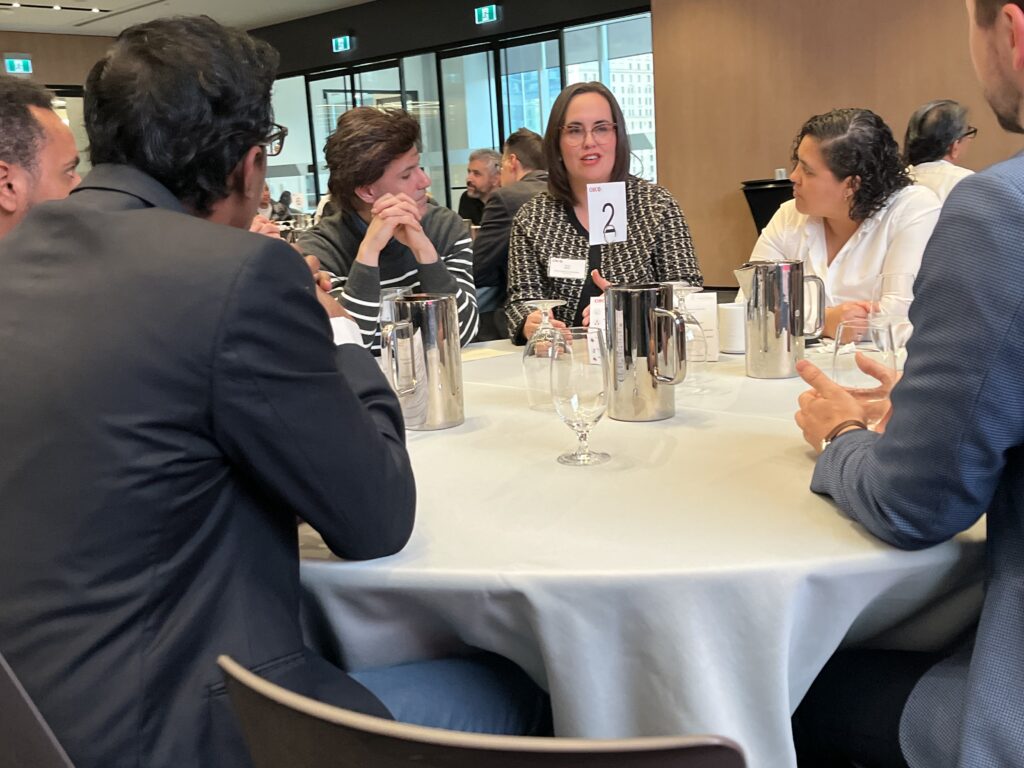
In my own career – across years of training, presenting, mentoring, and coaching – very few notes have made it across my desk. When one does, I stop what I’m doing. I read it twice. I remember that person long after the day it arrived. Not because I’m particularly sentimental, but because it is genuinely rare, and rare things stand out.
That’s not a small thing in a professional context. Standing out – for the right reasons, in someone’s memory – is exactly what most people are working toward.
“But Isn’t It Old-Fashioned?” – Addressing the Most Common Objection
This is the pushback I hear most often, and I understand where it comes from. We live and work in a digital-first environment. Sending a message takes seconds. The idea of finding a card, writing something by hand, addressing an envelope, and putting it in the mail can feel like an enormous amount of friction for something that could have been a quick text.
But that friction is the point.
An email lands in an inbox already competing with dozens of other messages. It gets read – if it gets read – and then it disappears into a folder or gets deleted. A handwritten note lands on a desk and stays there. It gets picked up again. It gets shown to a colleague. Sometimes it gets kept for years.
A post I came across on LinkedIn illustrated this perfectly. A father described the moment his daughter got her first job through a referral from her older brother. Her instinct was to catch him in the hallway with a quick “thanks for putting in a good word.” Her father stopped her and told her to sit down and write a proper note instead. Not because of formality or tradition – but because he wanted her to start her professional life the way he hoped she would continue it: by acknowledging the people who showed up for her in a way that they would actually remember.
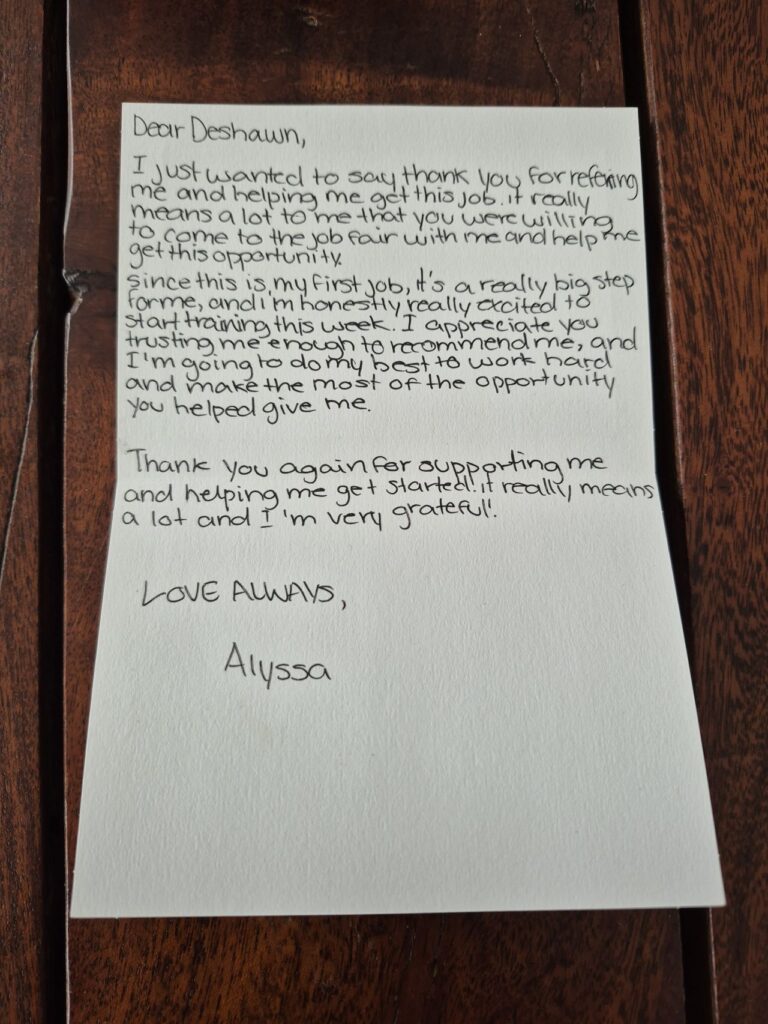
That’s the difference between a gesture and a practice. The email is the gesture. The handwritten note is the beginning of a practice.
When to Send a Professional Thank-You Note
One of the most common misconceptions about thank-you notes is that they belong in a narrow set of situations – after receiving a gift, or perhaps after a job interview. In reality, the professional world offers far more opportunities than most people recognize.

- After a job interview. Always, without exception. This is perhaps the most well-known context, and also the most consistently skipped. A specific, handwritten note after an interview is memorable precisely because almost no one sends one.
- When a mentor gives you their time. Whether it’s a one-hour coffee, a phone call, or an ongoing relationship, the people who invest in your development deserve more than a “thanks so much!” at the end of a conversation.
- When a client chooses to work with you. The moment someone places their trust in you professionally is exactly the right moment to acknowledge it in a tangible way.
- When a vendor or service provider delivers exceptional work. Think about how rarely this happens in their world. A note from a client who noticed and appreciated their effort is something many tradespeople and service providers say they have never received in years of working.
- When someone makes an introduction on your behalf. Referrals cost the person giving them something – their credibility, their time, their willingness to put their name behind you. That deserves to be acknowledged properly.
- When a speaker or facilitator gives up their time to be in your room. Preparation, travel, and the vulnerability of standing in front of a group are not nothing. A note that references something specific from the session will be remembered.
- When a colleague goes to bat for you – particularly one who didn’t have to. The quiet advocates in your professional life are often the least thanked.
- When a long-standing client stays through a difficult season. Loyalty is not guaranteed, and it shouldn’t be taken for granted.
None of these situations require a long letter. A few sentences – specific, sincere, and written by hand – are enough. The length matters far less than the attention behind it.
How to Write One That Actually Gets Remembered
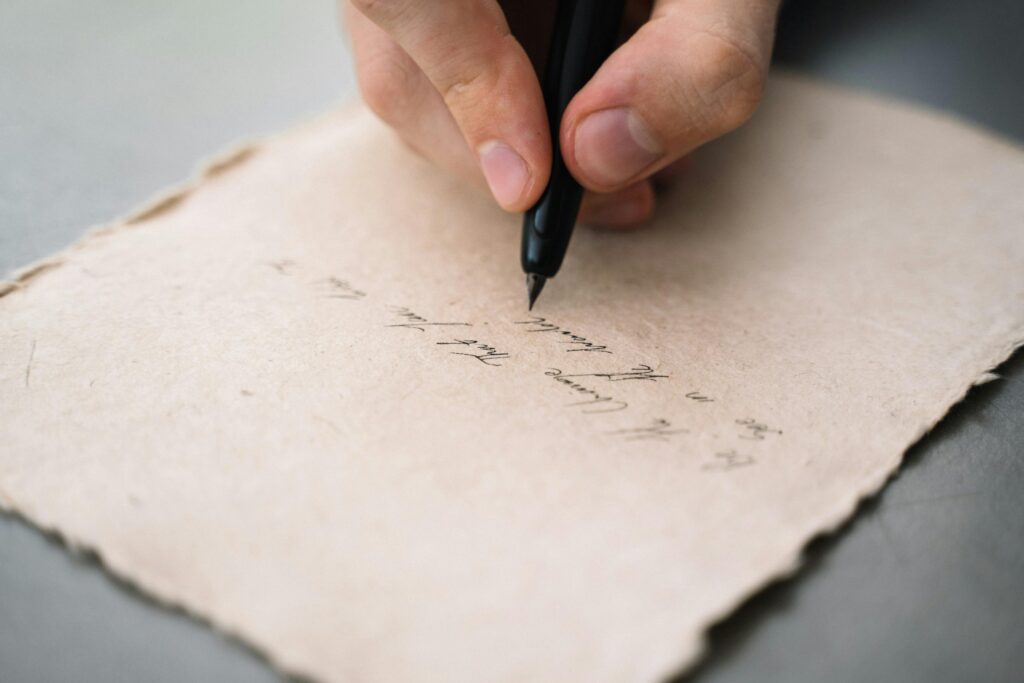
The most common mistake people make with thank-you notes is being too general. “Thank you for your time” tells the recipient almost nothing about what you actually valued. It reads as an obligation fulfilled, not a genuine acknowledgment.
The notes that get remembered share a few qualities:
They name something specific. Not just “I appreciated our conversation” but “The point you made about relationship-building in the first year of a new role gave me a completely different way of thinking about my situation.”
They say why it mattered. Specificity without context is still flat. What changed for you because of what they did? What will you do differently?
They are brief. Three to five sentences is almost always enough. A thank-you note is not a letter. Resist the urge to fill the card.
They are handwritten. Not typed. Not printed. Written, in your own hand, with a pen. The imperfection of handwriting is not a flaw – it is precisely what signals effort.
They are sent promptly. Within 48 hours is the standard worth aiming for. The longer you wait, the easier it becomes to convince yourself the moment has passed.
The Habit Worth Building
The thank-you note is not complicated. It does not require special skills, expensive materials, or a lot of time. What it requires is the habit of looking outward – of noticing, regularly, when someone has done something worth acknowledging, and then acting on that recognition before the moment slips by.
That habit, practised consistently over a career, does something quietly remarkable. It builds a reputation. Not the kind that comes from a polished LinkedIn profile or a well-timed piece of thought leadership, but the kind that lives in people’s memories – in the way they describe you to someone else, in the calls they make when an opportunity comes up that they think you should know about.
Lewis signed his notes “Ham-icably yours” and passed them around dinner tables. You don’t need to be that creative. You just need to start.
About the Author
Trina Boos is the Founder and CEO of Boost Academy of Excellence, where she helps professionals master workplace etiquette and business skills for today’s evolving work environment. Drawing from her experience as former CEO of Boost Agents, Trina has placed thousands of professionals in leading organizations across North America.
Want more workplace insights like this? Subscribe to our newsletter for practical tips delivered directly to your inbox.
Learn more about our training programs:
– Corporate Training Programs
– Individual Courses
