
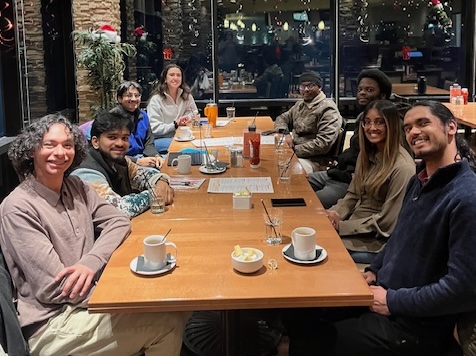
Last night, something incredible happened in Ajax.
Our third Gen Z Coffee Meetup brought together 8 young professionals – up from just 1 person at our first event. And the conversation was everything I hoped it would be.
We started with an icebreaker led by the wonderful Isabel Kropman, because let’s face it – walking into a room full of strangers to talk about workplace struggles takes courage, especially for a generation that learned to socialize through screens.
I shared why I’m doing this: As a trainer in leadership, professional presence, workplace etiquette, and communication, I constantly hear that “Gen Z is impossible to manage” or that they’re “the problem” when it comes to professionalism at work. But I believe if we listen, we’ll understand their perspectives – and see the beauty they bring.
Here’s what we discussed:
The Stats & Their Reality

I brought some stats on Gen Z’s workplace behaviour, communication gaps, and generational expectations – and we unpacked their perspectives on why these behaviours may be showing up. Not excuses, but explanations and context. We also talked about AI’s impact on job security, among many, many other topics relevant to their reality.
What’s Misunderstood About Gen Z?
“We’re lazy or unmotivated.”
The Reality? We set and communicate boundaries.
“Many of them carefully prioritize how they spend their time – balancing work, personal growth, mental health, and life goals.” Setting boundaries is sometimes misread as a lack of effort, but it’s really about working smarter, not harder, and protecting what matters.
“We can’t hold a conversation.”
The Reality? COVID and remote learning changed the way we communicate.
Some may struggle with certain in-person interactions, but when given space and guidance, they are eager and capable conversationalists (as was witnessed this evening when asked questions that engage them!)
“We’re flaky or unreliable.”
The Reality? Flakiness often comes from juggling multiple priorities or uncertainty in life and work. It’s rarely intentional – and with trust, clarity, and support, they show up consistently.
What Makes Them Shake Their Heads About Their Own Generation?

- Putting up a façade. Many feel pressure to appear “perfect” online or in professional spaces, even when things are messy behind the scenes. The constant curation can feel exhausting and inauthentic.
- Flakiness and not finishing things. This isn’t about laziness – it’s often about juggling multiple priorities, uncertainty, or just learning to navigate new responsibilities. Still, it’s something they notice in peers.
- Over-reliance on tech. While technology is second nature, there’s recognition that screens can sometimes get in the way of deeper, face-to-face connection.
Despite noticing these quirks, they also recognize growth in themselves and each other – and understand that these tendencies are part of navigating a complex, uncertain world.
What Excites Them About the Future?
- “We’re still so young – so much time, so many possibilities.”
- “Every little effort makes tomorrow brighter. I’m working my butt off to travel before I settle down.”
- “Redefining what success means. How can I keep raising the bar and surprising myself?”
- “Becoming an emerging leader in my area. Being a legacy for kids growing up here.”
What Scares Them?
- “Running out of time to accomplish everything.”
- “Macro-level things – politics, journalism, global instability – they’re impacting how I think about the future.”
- “Home ownership? Is that even realistic? We don’t even set that as a goal anymore.”
- “Work-life balance. Not losing relationships because all I did was work.”
COVID’s Lasting Impact
Here’s what they shared:
- “I loved the newfound freedom of not dealing with office dynamics. But over time, I realized I was missing soft skills – like picking up the phone – that older generations didn’t struggle with.”
- “I had a nasty professor in my first semester who told me my work was horrible. Because I was isolated, I thought that’s how professionals speak. It took meeting her in person to realize she was just rancid. And it took working with other professors to realize that this treatment wasn’t the norm.”
- “When I’m on Zoom, I’m glazed over. I can’t listen or focus. Maybe that’s because of COVID – I didn’t have to pay attention. First year of university, nothing stuck.”
- “In person, I can read my boss’s body language. I know when he’s having a bad day. Digitally? I can’t tell what’s normal.”
- “This is when endless scrolling started. Doom scrolling. Total addiction.”
- “Reintegrating into society was challenging, but I learned to adapt to people’s behaviour – even the nasty stuff.”
On “Networking”
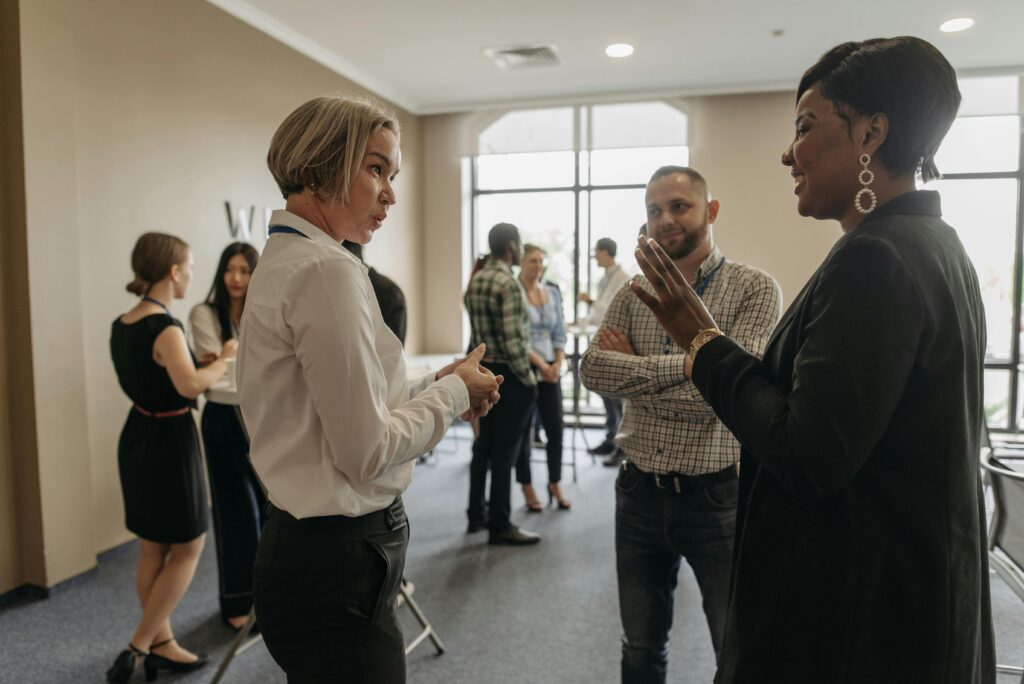
One person summed it up perfectly: “I hate interacting with people when you use the word ‘networking.’ But I love meeting new people. Once you get comfortable and learn who you’re talking to and what to talk about, it’s amazing.”
Here’s what I witnessed last night:
Once they knew they were being earnestly listened to, the conversation flowed freely. They found peers with shared experiences. They found a moderator willing to ask tough questions. And honestly? Magic happened. Connections were made. Insights were shared.
I gleaned so much from my time with them – insights that will inform my training on generational divides and how to bridge them. Leaders, if we want to understand Gen Z, we need to create spaces where they feel safe to be honest. When we do, they’ll show us not just their challenges, but their brilliance.
A huge thank you to Isabel Kropman for co-organizing, leading the icebreaker, and designing our beautiful invite. This community is growing, and I’m so inspired by what’s ahead.
About the Author
Trina Boos is the Founder and CEO of Boost Academy of Excellence, where she helps professionals master workplace etiquette and business skills for today’s evolving work environment. Drawing from her experience as former CEO of Boost Agents, Trina has placed thousands of professionals in leading organizations across North America.
Want more workplace insights like this? Subscribe to our newsletter for practical tips delivered directly to your inbox.
Learn more about our training programs:
– Corporate Training Programs
– Individual Courses
Connect with Trina on Linkedin: Trina Boos 🇨🇦🇹🇹
