
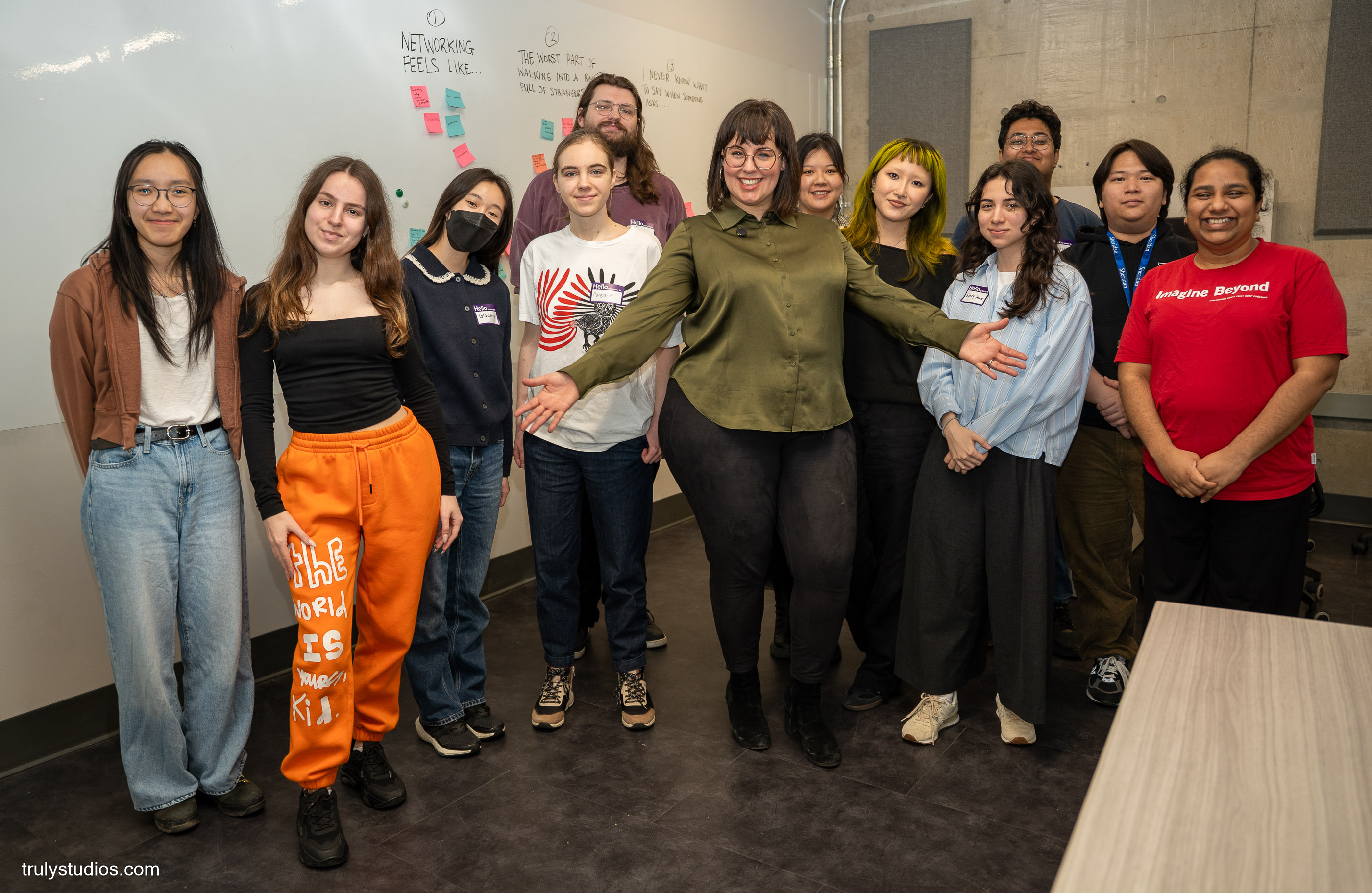
There’s a moment I love in every workshop I lead. It’s the moment when a room full of people who walked in anxious, arms crossed, convinced they’re “not the networking type” – starts to shift. You can feel it. The energy changes. The questions get bolder. The laughter gets louder. And by the end, they’re not just ready. They’re excited.
That’s exactly what happened when I coached Sheridan College’s Interaction Design graduating class this past week.
How it Started
I was invited to lead a career coaching workshop for fourth-year Interaction Design students as part of their year-end program. These weren’t just any students – they were days away from meeting a room full of industry professionals at an exclusive networking event. Design leaders, agency principals, UX directors, recruiters. The kind of people who could change the trajectory of their careers with a single conversation.
But first, we had to tackle the elephant in the room.
Most of them were terrified.
Before I said a word about strategy or tactics, I asked them to write down – anonymously – how networking made them feel. The responses came back fast:
“Fake.” “Exhausting.” “Like performing.” “Like bothering people.”
And that was exactly where I wanted to start.
The Workshop: Reframing Everything They Thought They Knew
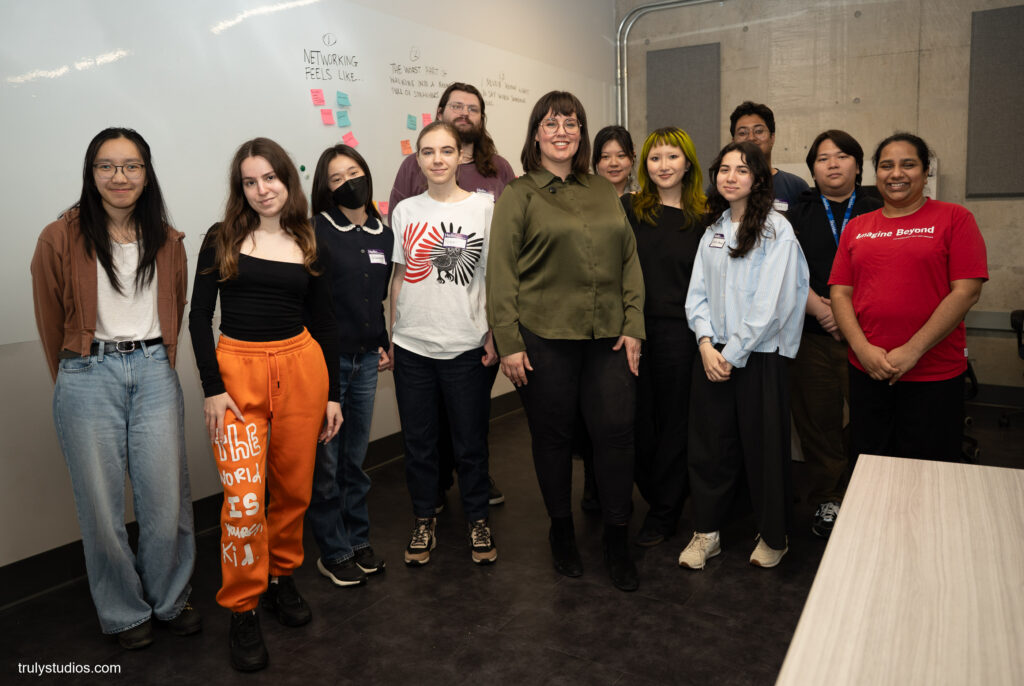
We spent the first part of the session doing something most networking workshops never do — we addressed the fear head on. We named the limiting beliefs, laughed at them together, and then systematically dismantled them one by one.
Because here’s the truth I shared with them: the best networkers in any room aren’t the loudest or the most confident-looking. They’re the best listeners. And these students — trained in user research, empathy, and human-centred thinking — already had every skill they needed. They just didn’t know it yet.
From there, we built the whole thing from the ground up:
Setting real goals. Not “I want a job” – that’s a wish. A real goal sounds like: “I want to connect with three UX leads at Toronto design agencies by the end of April so I can get a real conversation into at least one of them.” Specific. Measurable. Actionable.
Learning to listen first. We workshopped the difference between questions that make people’s eyes glaze over — “Are you hiring?” “Can I send you my portfolio?” – and questions that make people light up. “What are you most excited about working on right now?” The room practiced in real time, building their own personal question banks based on actual research they’d do on the professionals they’d be meeting.

Crafting their elevator pitch. Using the formula “I’m a ___ focused on ___ and I’m looking for ___” — each student built a pitch that was honest, confident, and specific. No more “I’m just a student.” They were graduating interaction designers with a focus and a direction. That’s a completely different energy.
The follow-up formula. We broke down exactly what a great follow-up email looks like — the subject line that gets opened, the specific reference that proves you were listening, the low-commitment ask that makes it easy to say yes. We even workshopped a real example written to a UX director at RBC, line by line.
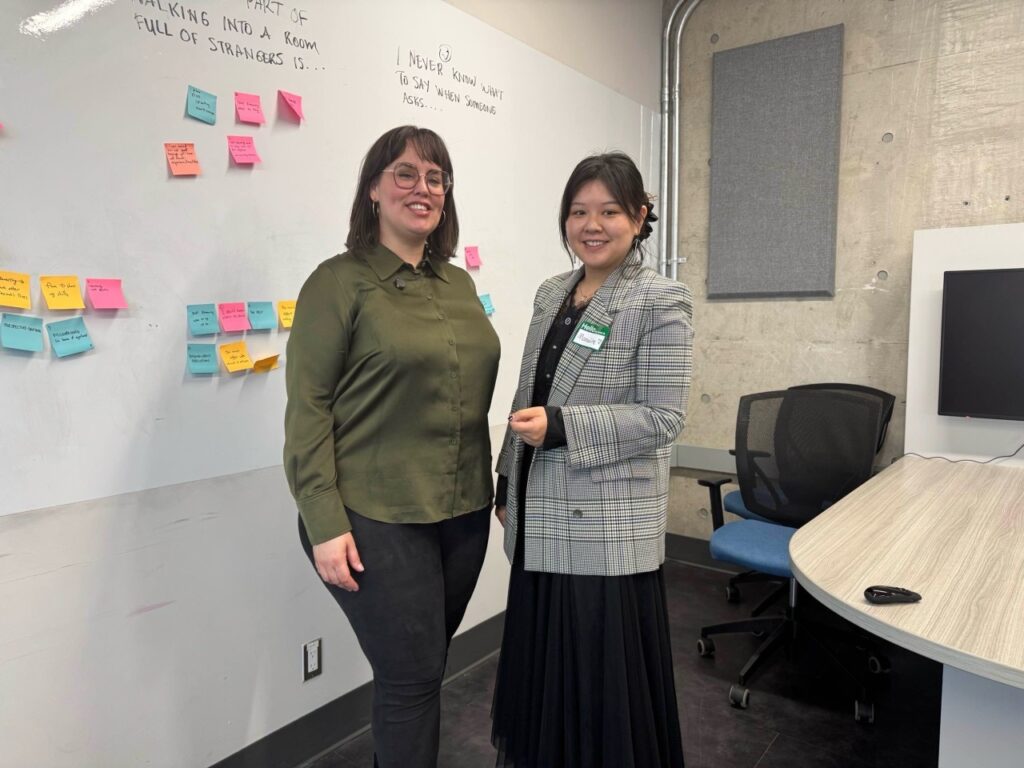
Then They Invited Me Back
After the workshop, Sheridan asked me to return in the days leading up to the event itself for a focused preparation session. This is where things got really practical.
We covered everything they’d need to walk into that room with confidence:
- How to dress – business casual as the floor, but with a designer’s eye for detail and personality
- How to work the room – arriving early, positioning yourself strategically, making the first move
- How to handle the drinks, the food, the business cards, the handshakes — all the small moments that add up to a first impression
- How to be a gracious presence – not just networking at people, but genuinely hosting the conversation
- How to exit gracefully, follow up meaningfully, and turn one good conversation into something real
We role-played. We practiced. We problem-solved the scenarios that make people freeze — the awkward silence, the forgotten name, the person surrounded by people all night. By the time we were done, they weren’t just prepared. They were ready.
What Happened Next
The event went beautifully. But don’t take my word for it.
Here’s what one student wrote to me the morning after:
“Hi Trina! The networking event went amazing! I was not able to do a deep dive with my research but I was able to work with the simple surface research I was able to get done before the event. Thank you again for the amazing insights. You have largely influenced my perception of networking! Like you had mentioned, I messaged all the folks I connected with yesterday with something we connected on and asked them for a coffee chat to further develop our connection.”
And from another:
“Hi Trina, I just wanted to update you – the event went so well. I had an amazing time getting to know the attendees. Everyone had such good conversations. Thank you for all of your amazing tips.”
What the Educators Said
“It was such a pleasure to work with Trina in organizing a career coaching workshop for design students at Sheridan College. She was thoughtful in her approach to understand what our students need and created a bespoke workshop full of practical and hands-on takeaways. She genuinely cares and loves what she does and I would love to work with her again.”
“Trina gave a workshop to our fourth year students preparing them for networking and joining the industry. The workshop was excellent – the students got so much out of it. The energy and enthusiasm that Trina brings is very refreshing.”
“I was very fortunate to be able to attend. It was incredibly insightful. She was engaging, knowledgeable, and provided both practical strategies and valuable insights throughout the session. I left with clear skills that I can immediately apply.”
The Lesson That Stays With Me

Networking isn’t a personality trait. It’s a skill. And like every skill these students spent four years developing – it can be learned, practiced, and refined.
What I saw at Sheridan wasn’t a group of introverts forced to perform. It was a group of talented, curious, empathetic designers who realized that everything they’d been trained to do – listen deeply, ask great questions, understand people – was exactly what great networking requires.
They just needed someone to show them the connection.
That’s what I’m here for.
About the Author
Trina Boos is the Founder and CEO of Boost Academy of Excellence, where she helps professionals master workplace etiquette and business skills for today’s evolving work environment. Drawing from her experience as former CEO of Boost Agents, Trina has placed thousands of professionals in leading organizations across North America.
Want more workplace insights like this? Subscribe to our newsletter for practical tips delivered directly to your inbox.
Learn more about our training programs:
– Corporate Training Programs
– Individual Courses
